If you’ve been doing Kegels for months with nothing to show for it, this is the part nobody explained.
You cannot strengthen a muscle without something to push against.
Not your arms. Not your legs. Not the muscle that seals your bladder.
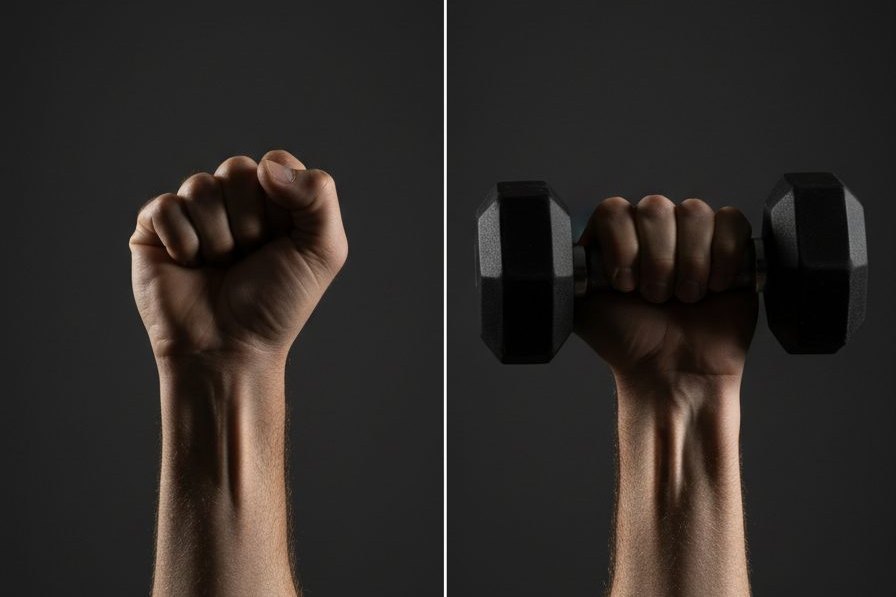
Clench your fist right now. Ten times. Feel it working?
Of course you do. That’s the muscle firing.
Now do it every day for two years and see how much bigger your arm gets.
Nothing happens. Because contracting a muscle and loading a muscle are two completely different things. One is movement. The other is training.
A Kegel with no resistance is a bicep curl with no dumbbell.
That’s it. That’s the whole reason.
It was never that you did them wrong. It was never that you started too late, or that you’re too old, or that the damage is permanent.
You were given half a set of instructions.
What Kegel actually prescribed
Dr. Arnold Kegel was an American gynecologist. He developed the exercise in the 1940s for women after childbirth — which is the first thing most men ask about, and the answer is that it’s the same sheet of muscle in both of us. Same tissue. Same rules.
But here’s what got lost.
He never told anyone to squeeze into thin air.
He built a device. A resistance device. His patients trained against measurable physical pressure, the same way you’d progress any other muscle in your body.
Training that way, he reported success rates north of 80%.
The squeeze survived because it’s free and fits on a photocopied sheet. The resistance didn’t, because it required equipment. Seventy years later your doctor hands you the half that costs nothing — and nobody has told him it’s half.

So what does the other half look like
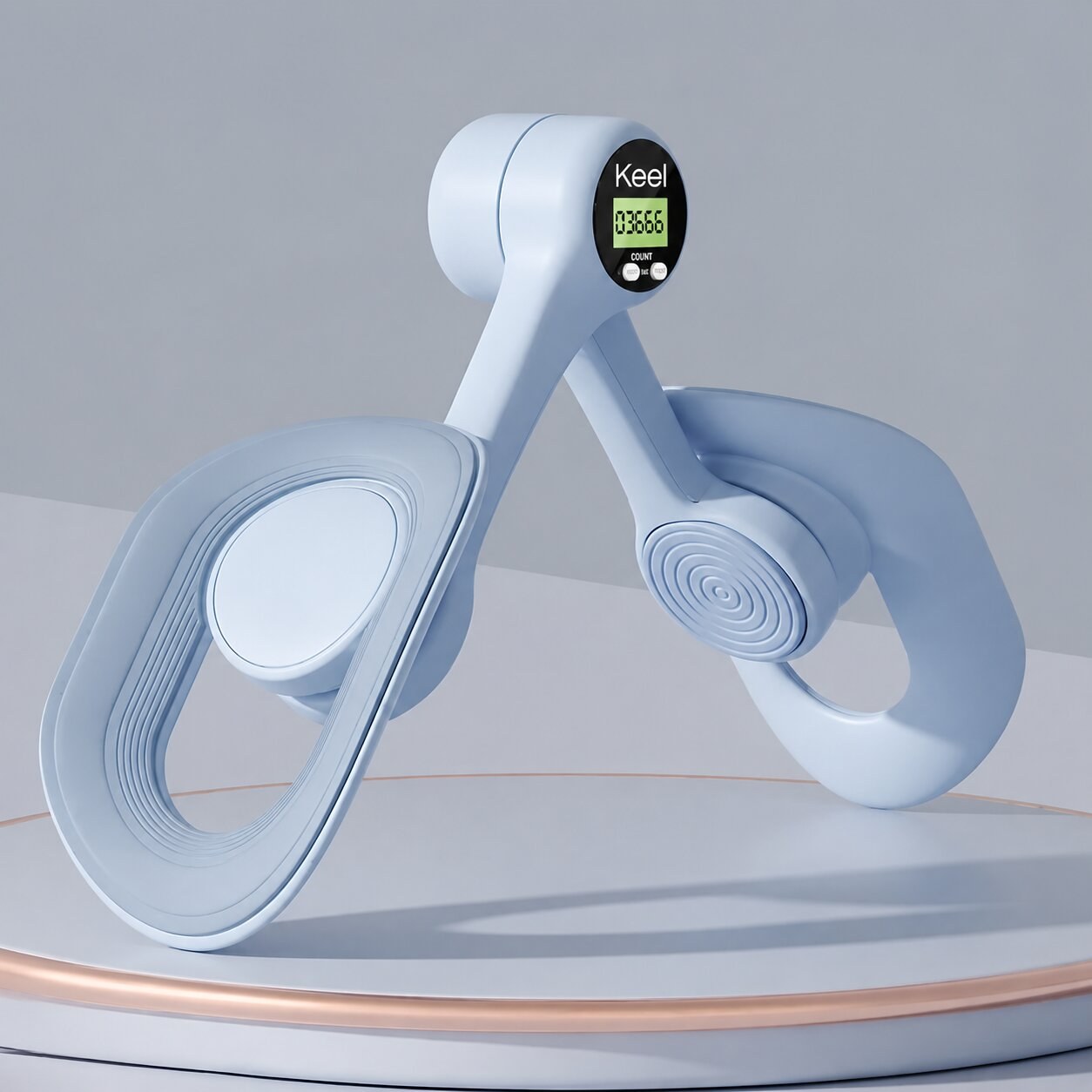
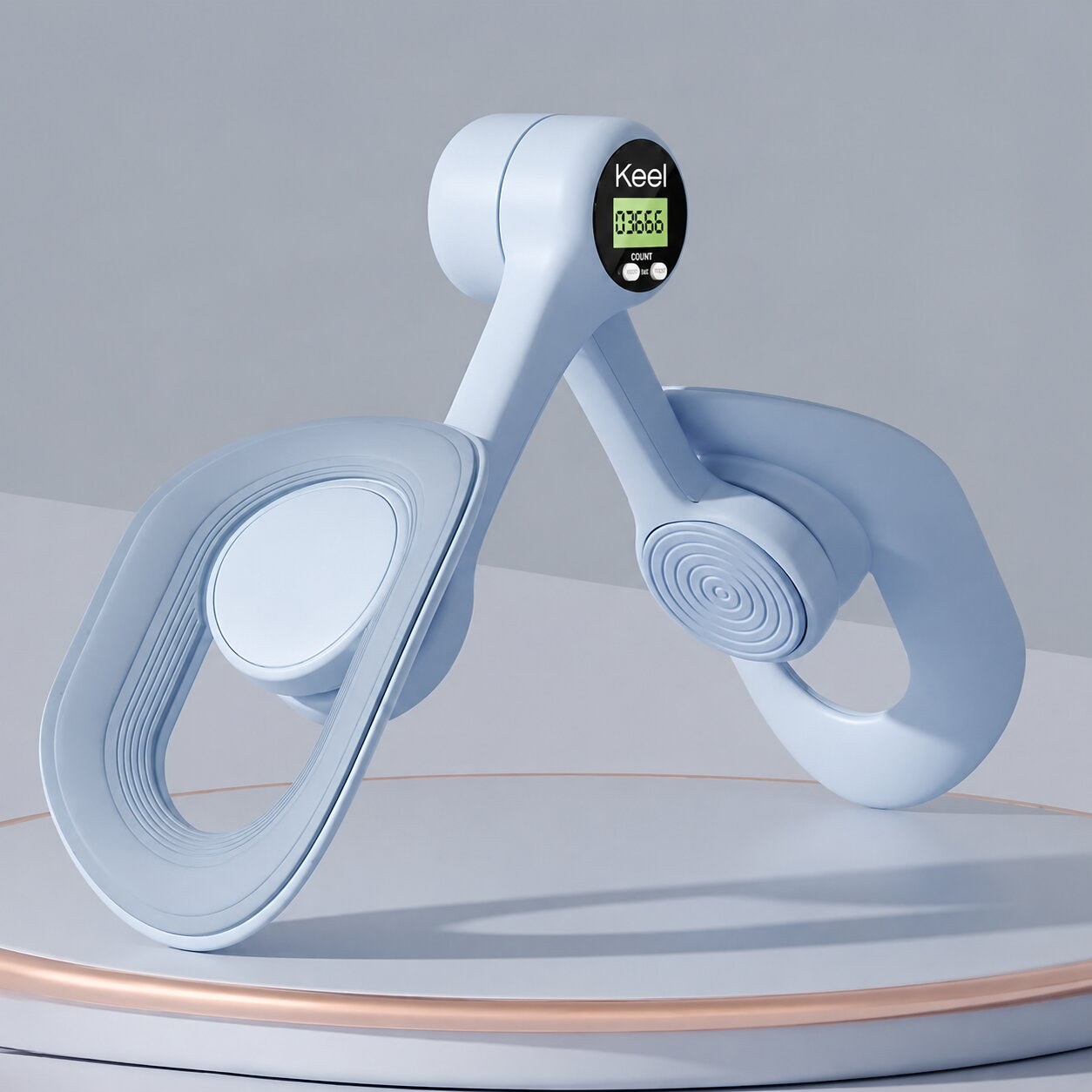
The Keel Control Trainer is Kegel’s device brought up to date — same principle, made for home use.
You sit in a chair. You put it between your knees. You squeeze against its resistance.
Three sets of ten. About five minutes.
Nothing goes inside you. No wires, no pads to stick on, nothing to charge. It looks like ordinary gym equipment, which is exactly what it is.
What it isn’t
It isn’t an app. Apps track whether you did the exercise. They don’t add load.
It isn’t a pad. Pads absorb the problem. Nothing gets stronger.
And it isn’t one of those $3,000 clinic chairs that contracts the muscle for you.
Which, when you think about it, is like paying somebody else to do your push-ups.
You do the work. That matters more than it sounds like it should — because the control you’re trying to get back is a connection between your brain and that muscle, and you don’t rebuild that by having a machine do it on your behalf.
Ray’s account
Ray is 68. Two years post-prostatectomy. He did his Kegels the way he was told — in the car, in front of the news, lying awake at five in the morning.
Four to five pads a day, for two years.
“I could feel them working,” he says. “That’s what kept me going. You squeeze and there’s that little lift and you think, right, that’s the muscle.”
Twelve months came and went. Fourteen. Eighteen. Nothing changed.
Somewhere around the two-year mark he stopped believing it would.

What changed it was a physical therapist who watched him do one and said:
He’d spent thirty years in construction and eleven of them in a gym. He understood that sentence immediately.
The reframe did more than anything else in two years — not because it fixed anything by itself, but because it moved the blame off him.
How long it took
Nothing in week one. He remembers thinking, here we go again.
In the second week he noticed he’d stopped bracing before standing up — that little clench you do without realizing, once you’ve learned that standing is when it goes.
By week four he was down from five pads a day to two.
By week seven, one — mostly out of nerves rather than need.
He’s nine months in now and doesn’t wear them.
He played eighteen holes in March for the first time in two years.

Individual results vary. Timelines described are illustrative, not a guarantee.
Four things men ask before they buy one
“I’ve done Kegels for a year and nothing happened.”
That’s the most common reason this fails, and it isn’t evidence the muscle can’t be trained. It’s evidence it was never loaded.
“I’m too old.”
Skeletal muscle responds to training at any age. That’s not a motivational line, it’s just how the tissue works.
“I only leak when I cough or lift.”
That’s a floor that can’t hold under sudden pressure. Which is a strength problem, and strength problems are what resistance is for.
“Isn’t this just another gadget?”
It’s a physical thing you push against. Closer to a dumbbell than to a gadget.